Thursday, April 23, 2020

LASAGNE

Lasagne recipe 
We often have small portions of left over sabji's in fridge. Those can be used up for this. Alternatively any coarsely chopped vegetables will do. (cauliflower, capsicum, french beans, tindora, green peas, spinach)
 
Ingredients-
1. Vegetables as above- one cupful
2. Lasagne sheets- 4 to 5
3. Ovenware (ceramic)- just larger than the Lasagne sheets so that all the sheets are submerged in right amount of  sauce.
4. Olive oil- to apply to base of ovenware
5. Italian red sauce (bolognaise/neopolitan/lasagne etc- plenty of varieties avalable
6. Sundried tomatoes or small cherry tomatoes
7. Grated cheese- any variety- half cup
 
Preparation-
1. Line bottom of pan with little olive oil (be generous if u love olive oil)
2. Place one lasagne sheet at bottom
3. one layer of vegetables
4. another Lasgane sheet on this
5. one layer of sundried tomatoes or cherry tomatoes. Then puor some red sauce on it
6. Another Lasagne sheet
7. layer of red sauce, salt to taste (add little or none) I dont add salt
8. Layer of Lasagne sheet
9 Pour red sauce till everything is covered with sauce (should not overflow)
 
Cooking-
1. Place the ovenware in oven preheated to 220 dgrees centigrade
2. Cooking time 45 minutes.
3. Take out layer with grated cheese and cook for further  7 minutes.
4. stop cooking but leave it in oven till cheese is golden.
 
It is ready to be enjoyed piping hot.
Freshly ground pepper compements well.
Salad in my next e-mail goes superb with this lasagne.
Red wine as well if you like.

OLIVES


Olives recipe. Courtesy Gaurav Rathore

heres the olives recipe.

u need a 50ml bottle with large mouth (check image for example)

if u have pepper mill u can ground fresh pepper there or use ur food processor

use about 1tsp ground pepper - put it in bottle

3 table spoons of extra virgin olive oil to go in

salt to taste (1/3 tsp)

squeeze one large lemmon

shave of lemmon peel (zest) and add to marinade

replace lid and shake till the whole thing turns white

open a fresh bottle of olives, drain off the broth.

shake marnade again and empty in the bottle of olives

shake well again.

you can add italian spices of ur choice but not necessarily.

SALAD DRESSING

Salad dressing recipe   Gaurav Rathore inspired

This salad dressing is simple but out of this world.
 
Ingredients-
 
1. Two tablepoons of olive oil
2. Juice of one large lemmon
3. Lots of freshly ground black pepper
4. Salt to taste
 
Preparation-
 
Put above ingredients in a small bottle and shake vigorously- dressing will become white in colour.
 
Use- 
 
1. put Pieces of Tomato, cucumber, onions is a plastic bag, add this dressing and shake the bag.
2. put olives in a plastic bag, add dressing and shake.
 
Salad/olives are ready to eat. Will keep well in fridge for couple of days. Tastes better chilled.

CHUTNEY

Chutney recipe

Good.
Curd+mashed potatoes,, roast peanuts crushed, green chilli,salt,little sugar 
mix.
This chutney will improve  the taste of sabudana vada,Thalipith etc.

BHENDI OKRA SABJI

Recipe Okra bhendi veg. Gauri’s recipe. 
Nice

...sukha khobra..khas khas...onions and tomato roasted on fire
.....roast khobra and khaskhas also...fine paste....use as much as you want 

and add jeera and dhaniya powder...amchur little...pinch if sugar...garlic ginger paste and kala masala....

and make delicious bhindi๐Ÿ˜Š๐Ÿ˜Š๐Ÿ˜Š๐Ÿ˜Š๐Ÿ˜Š๐Ÿ˜ŠMarathi goda masala...

HALDI PICKLE

Haldi pickle recipe 
Mommy’s  recipe

Fresh Halad and Ginger pickle=
Wash fresh halkund and ginger,
peel,grate 150 gm halkund,50 gm ginger and 3tbs.
AOLA OR RAW mango or add  3 tbs lemon juice.
Salt 1/4th of the total weight.
50 gm. mustard powder,
8-10 green chillies or 3 tsp chilly powder.
Methi powder 1/2 tsp.,
hing  1/2 tsp.(Both fry littel)Let it cool .Mix.
You can change the ingredients as per your liking.  

RASAM RECIPE

RASAM recipe by Arti


Handful of tur dal boiled in lot water. Mash it when cooked . 

Add laddoo size tamarind ball water

Add 3 chopped tomatoes

2 large tspn rasam powder 

Salt and kadi patta and  asafoetida.

Boil on sim for 45 min 

Quantity will be ard 2 litres of rasam

Add tadka: rai kadi patta red chilly ( whole ) and coriander

Add coriander leaves while cooking that adds flavour too

CHICKEN MUTTON RECIPE

Chicken Mutton recipe 

Mutton recipe. 
Combo inspiration. 
1. Spanish tapas
2. Mom's mutton 

Andaaz for 1 kg mutton (any meat)

Make in following order. 

1 kg Tender Mutton or chicken.
Clean and wash. Drain. 

Marinade. 
200 ml red wine. Have a glass or two simultaneously. 
( Yogurt can replace wine)
Grated ginger and chopped garlic. 
Make it gingery. 

Chop five large onions. 

Large wok. Heat up oil or ghee. Cook onions till they slowly pink. 

In the meanwhile chop handful washed coriander. 
I use scissors but you can use knife. 

When onions are soft and pink add garam masala + chat masala(or salt).

Preferred option. Homemade (**** separate recipe) garam masala with overtones of cinnamon and cloves. (Takes some hardwork)
 
Stir for few minutes then add chopped coriander.
If dry add some wine.

Stir few more minutes. 

Add the marinated mutton. 
Mix well.

Cover. Simmer. 

Do not add water. 

Taste after 45 min. Add salt/chat masala if needed. 
Red chille powder/ black pepper  if you want more spicy.

BREAD RECIPE

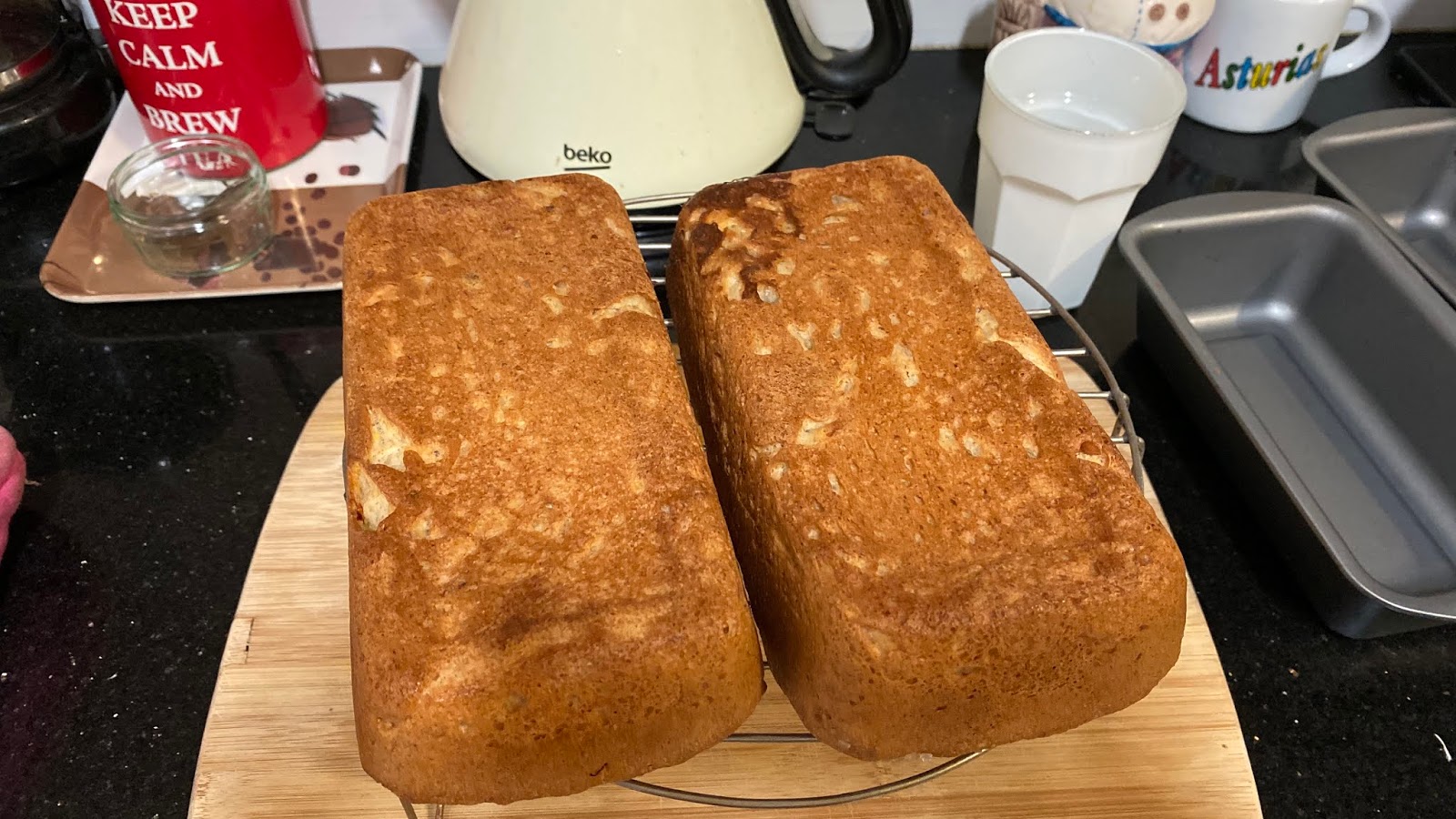
Bread recipe


1cup warm water+1 tbsp sugar+2 tbsp fresh yeast - mix (if you want to add milk then reduce that much water)

1.25 cup atta+1.25 cup maida
Add 2 tbsp olive oil
1tsp salt
Add Italian herbs and chopped sundried tomatoes. 

Mix and knead 10 min. 
Place in lightly oiled bowl cover with damp cloth

30 min proofing 

Knead again 30 mi. Proofing

Bread tins lightly oiled

Brush top with milk or egg. Sprinkle spice u like 

Oven 200 degrees 10 min
Then 190 for further 30 to 40 min

Tap bread. Should sound hollow when baked


SPANISH OMELETTE

Spanish omelette by Sanjay Bhatia


CHICKEN MUSHROOMS IN WHITE SAUCE

Chicken mushroom white sauce by Sanjay BHATIA


POTATO AUBERGINE BHAJI

Potato aubergine bhaji Arti’s recipe

Oil
Jeera
Pounded garlic
4 brinjals
1 potato
2 tomatoes
Haldi
Mirchi namak
; ( let it cook in very sim)
Garnish with coriander .
Done


Wednesday, October 10, 2018

peanut aamti (curry)

MOMMY’s recipe 

very good for any UPAS.
1 Vati roasted shengdana powder + 1/5 vati water,mix,grind.
 KEEP PAN ON gas,put 2tbs.garam ghee,when hot put one fourth tsp cumin seed, when red put in shengdana mixture,salt,4 kokam,stir,Take 2 boils.mix water if you want.

Friday, March 10, 2017

high heels issues

https://plus.google.com/101497374323083010286/posts/UQyYe33NiTb

Thursday, March 9, 2017

tailor made knee replacement. oxford unicompartmental knee replacement

Long gone is the era when we used to become homebound and depressed after end stage arthritis hit our knee.

We have become active and sporty in modern India. Our life expectancy has improved.
Some of us have become too busy in our day to day life. Hectic or sedentary? Difficult to say but surely lack of exercise and poor nutrition comes with it's penalty. 

Wear and tear of joints aka osteoarthritis has become very common as a result of above. We are living longer, some of us are getting injuries because of overactivity and some succumbing to lifestyle disease.

Knee joints are most commonly affected by osteoarthritis. why is that?
we humans enjoy an erect posture unlike most other animals. Our weightbearing knees let us enjoy all those sports and activities all our life but take the toll eventually.
They start wearing out.

interestingly the knee follows a pattern of wear and tear. Knee can be roughly divided in three compartments. inner, outer and knee cap

Most of us especially Indians have a slight bow in our shinbones (tibia) This causes more loading of the knee joint on the inner aspect  compared to outer aspect.
As the knee wears out more on the inner aspect the bow in the legs increases making us bowlegged.
We often see elderly people with bow legs. They have an advanced osteoarthritis of the knees which has caused the legs to bow because of asymmetrical wear.

Anyway, we doctors have always teamed up with our engineer friends to find solutions for worn out knees. Over last many decades we have been able to give people pain free knees to enjoy life.

When the arthritis starts we can advice various activity modifications and exercises. There are supplements to improve joint lubrication and keyhole surgery can tidy up the joint to make it last a bit longer.

However when the joint shows advanced arthritis these modalities cease to help.
That is when advanced engineering comes to our rescue.

Knee replacement design was pioneered in England and USA. Dr Insall played a critical role in defining the modern knee replacement.

Knee replacement aims at restoring the normal painfree functioning of the knee joint by replacing the worn out surface.
All three compartments are replaced.
There are three main components. A cap which covers lower end of thigh bone.
A base plate which replaces the top of the shin bone. A knee cap undersurface.
These components are fixed to the bone using an acrylic polymer which we cann bone cement.
Between these components is a long lasting bearing.
This is known as a total knee replacement popularly called a TKR.
In the last fifty years so many things have evolved.
we have understood the anatomy and geometry of the knee mush better. That has resulted in more anatomic designs of the prosthetic knees.
We have understood the dynamics of knee motion and the way we walk. This input has resulted in more natural feeling knee replacements.

The materials are evolving every decade.
We started with standard stainless steel alloys and we thought that's the best.
Then came cobalt-chrome, titanium alloys making our joints lighter and longer lasting.
Use of ceramics have increased the longevity further. I hope we have a knee which "never wears out" soon.

The fixation of the prosthesis to the bone has become more natural by use of various types of coatings like tantalum trabecular metal and hydroxyapatite.

The tools to perform surgery used to be precision engineered mechanical guides. We used to be very proud.

But computer navigation made these lovely tools a history.

Customized preplanned patient specific knee replacements made computers look primitive. Now all of this will be surpassed by use of orthopaedic robots.

Surgical techinique and training not only evolved by technology but modern surgical handicraft became minimally invasive.
Patients experience much less pain, they walk home quicker and they return to active life much sooner.

Mr Taylor came to me.
Keen golfer and sportsman.
About my age. instantly likeable person.

His knees were wearing out. Typical Indian mild bowlegs.
Wearing out only on the inner side.
He wanted to walk, cycle and golf.
He wished to lead active working life.
I examined him, did his xrays and scans.
Just the inner/ medial compartment worn out.
Outer compartment, kneecap, ligaments were in a pristine condition.

It was a long counselling session.
I offered him a very special solution.
Best of modern technology and surgical precision.

I decided to just replace the worn out medial compartment.
This is known as a "unicompartmental knee replacement"
Its also called "microplasty"

This very special technique was developed and perfected in Oxford England over last couple of decades.
It involves a delicate fine tuning of the worn out inner compartment by just removing precisely only the worn area.
Rest of the knee which is normal is preserved in its normal anatomoical functionality.

This is like a hybrid engine we see in high end cars today.

two different mechanisms married to each other functioning in unison for a great long term future.

Mr Taylor agreed to let me give him "tailor made" knees.

Because he was a man in a hurry with lots of commitments in a short span, I took another unusual decision in his case.
I operated on both his knees in a single sitting.
Normally I would do unicompartmental arthroplasty one knee at a time to allow a leisurely recovery time.

In his case I did bilateral single sitting unicompartmental arthroplasty. I believe a first one in Maharashtra.

Wednesday, March 1, 2017

knee replacement guidance

Total Knee Replacement on the horizon

There is a lot of fear when a surgery is advised for knee arthritis.

What is arthritis?

When the knee joint wears out we call it arthritis. This may be age related wear and tear (osteoarthritis) or inflammatory (rheumatoid).
The joint gradually wears out leading to loss of cartilage cover and an end stage arthritis which then needs some definitive and long lasting solution. Basically the worn out surface of the knee now needs to be replaced by a artificial surface called “KNEE REPLACEMENT”

Latest advances have made knee replacement an excellent long term solution for a pain free active life and a satisfying achievement for arthroplasty surgeons like myself.

In majority of patients we need to replace the entire knee surface with a total knee replacement (TKR)
In some patients where the joint has only one sided damage we can fine tune the joint by replacing only the worn out area. This is known as a Uni-compartmental knee replacement or a UKR. Its a very special technique with great results.
Such patients return to a normal life and its difficult for anyone to figure out that this individual was a arthritis patient.

Certain advances have made which I will expand on shortly. These advances have made the TKR more like your own natural knee joint, longer lasting and able to stand forces of some sports and recreational activity.

These are basic types of knee replacements

  1. Standard total knee replacement (age old, tested with time and proven)
  2. Stabilised (some ligaments can be sacrificed)
  3. Cruciate retaining (tissue preserving)
  4. HI-flex (allows more bending)
  5. Rotating platform (design variation to reduce stresses)
  6. medial pivot (mechanics like a normal knee joint)
  7. Gender specific (specific designs for men and ladies. accommodates for tiny bones)
  8. Oxynium/ceramic (long lasting coating on alloy)
  9. Revision knee replacement (designed to be used when original knee replacement wears out)
  10. Unicompartmental knee and microplasty (replaces just the worn out part leaving normal part untouched
  11. highly cross linked polyethylene or vitamin E impregnated bearings.
Choice of replacement hardware for the surgeon is plenty. What is right for you is best advised by your surgeon according to your needs, age, activity levels and condition of your knee.


Anatomy 

The knee comprises the joint between the femur and the tibia but also the joint between the patella and the front of the femur. Either or all of these parts of the knee may be affected by arthritis to various degrees. 


Who Needs TKR and who doesnt?

Whoever has arthritis which has progressed to an end stage will have significant pain, need to take painkillers, reduced mobility, limp. These are the symptoms which decide on need of TKR. we don't necessarily wait for all these symptoms to appear. ability to sustain pain varies from person to person.
because of excellent technology and expertise available patients may choose to avail the benefit of surgery before symptoms get bad.
when symptoms are significant the effects on the knee are showing up. deformities arise and accordingly I have to plan the hardware.

What are the risks?

we do tests before surgery. They are bloodwork,  X-ray chest, ECG and Echocardiogram. this tells me about fitness. majority of patients are able to achieve fitness for a safe anaesthetic and surgery.
Often I do TKR on both knees in a single sitting.
Some patients with multiple medical problems like poor heart function or bad lungs are likely to have major complications and surgery may not be possible. However age is not a criterion. I have seen many old people with excellent and well preserved health. Such elderly candidates benefit immensely from TKR.

Can I choose the knee I want?

Certainly but only to an extent. You must rely on surgeon’s guidance to understand what type of TKR design is good for your future years of mobility and freedom from pain.

What if I don’t want TKR?

If you have end stage arthritis and unable to have TKR because of fitness problems then there may be a solution but it”s a difficult one. Fusion or arthrodesis of the knee can be done but along with pain all movement will be lost.
Not choosing to have the surgery because of fear will not allow me to help you much.

Surgical technique

My anaesthetist will either use a spinal - epidural anaesthetic or a general anaesthesia. depending upon what is safe for you.

once I prepare the knee with antiseptic solution an incision of 15 cm is made in front of the knee
If a uni or partial knee replacement is being performed, a smaller incision sometimes of only 5 cm in length may be used. 
Knee replacement is performed in following  steps. Whole procedure takes hour and half or so.
  1. Tibia (leg bone) is shaped precisely horizontal to receive the base plate.
  2. Femur (thigh bone) is shaped to receive the femoral cap. basic cut is parallel to Tibia cut
  3. Ligaments are balanced during above steps so that the cuts remain perfectly parallel and knee can function as a hinge
  4. patella (knee cap) is shaped to receive the patellar button
  5. Trial components are fitted to ensure in tibia, femur and patella to ensure smooth and balanced motion
  6. Final components are fitted with an acrylic polymer (bone-cement) which sets in 10 minutes to ready the knee for many years to come
  7. wound is closed in layers after infiltrating pain killers.
The recovery from the operation requires about two to four days in hospital. In this time physiotherapy is commenced.

 Physiotherapy 

The day following surgery the physiotherapist will get you out of bed to commence walking with the help of crutches or a walking frame. 
Initially the leg will be placed on a continuous passive motion machine to gently move the knee through a pre-set range of motion. In addition, exercises to improve the strength of the quadriceps muscles are performed.
The machine will be removed soon for you to perform your own exercises. 
The physiotherapist will also begin to encourage you to bend the knee. Sitting over the side of the bed may assist. 
Early exercises and mobilising of the knee will cause some discomfort and swelling. However, this is normal and we have a pain team to look after your comfort.
After 5-10 days usually you are able to walk with minimal pain, with the assistance of sticks, crutches or a frame. You should be able to manage stairs with the assistance of a banister, and to care for yourself around the home. 
Whilst at home the exercise program of quadriceps exercises should be vigorously continued. Approximately 20 minutes couple of times a day will be ample. Out patient physiotherapy sessions should be arranged during this period. 


Various modern techniques to enhance the results.

1. Minimally Invasive Surgery: MIS
Minimally invasive surgery involves the use of not only smaller wound incisions but the tissues are anatomically preserved. 
These techniques usually result in significant advantages in respect to improve the speed of recovery, speed of mobilisation, shorten hospital stay reduce the period off work and reduce the time until functional and sporting activities can be resumed. The techniques also usually reduce the amount of post-operative pain experienced and the need for post-operative pain relief and analgesia.
special instrumentation to enable surgery to be undertaken. 
2. computerised navigation
the geometric cuts in the bone are calibrated using classic mechanical instruments which are precise.
However use of computerised navigation during the surgery can improve on the precision even further.
here the readings from the patients knee are relayed to a computer which then guides us precisely.
when we perform surgery on youngsters or if the case is very difficult this navigation is immensely useful.
3. virtual surgery or patient specific (customised) knee replacement
its like doing your homework the before school.
a CT scan of your knee is used to get a 3D print. This 3D life sized model is used to predetermine the cuts on the bone.
Once this homework is complete the surgery is completely planned even before patient is in hospital.
It ensures a precisely performed TKR and any difficulties in surgery anticipated well before the actual operation.
4. Robotics- 
one step ahead of customisation. ultimate precision attained by using a surgeon controlled robot to perform certain mechanical steps of surgery


Results and Complications 
Modern techniques and technology ensure that the complication rate is minimal. Beside the anaesthetic risks, which are very low, infection that involves the joint is less than 1:100. This would present as the knee becoming hot, swollen, throbbing and painful after 2-4 days, or alternatively at any period thereafter. Venous thrombosis is in the order of 1:50. To avoid thrombosis anti-coagulant therapy will be given for a short period after the operation. Generally, the results of knee replacement are excellent and as good as or better than hip replacement. 
I expect that a knee replacement should, if cared for, last 15 years in over 90% of patients. After joint replacement, in order to avoid infection of the new joint, all infections or dirty wounds must be adequately treated with antibiotics. A yearly review should be undertaken. This is to ensure that the prosthesis is not becoming loose.  


Wednesday, December 16, 2015

Gym supplements protein

India is getting muscular in more ways than one!

We are seeing modern gyms in all neighbourhoods now.
Our cricketeers and bollywood icons looks fitter, brawnier with sculpted muscles to envy of most men.
we think why not me?
we start gymming and find that months of pumping iron does not get us anywhere near rhitik or salman.
we start thinking.........should we take supplements?

protein supplements are perhaps one of the common ones available. as long as there are no other additives in it they may be safe.
\those come in various forms ranging from simple protein bars and shakes to specialist products which contain not only proteins but also creatine or testosterone boosters.

proteins are building blocks of human body. Our muscles are mainly made of protein. Thats the simple logic of needing protein to build up protein.
our body undergoes constant turnover. all our body tissues are constantly being renewed and refreshed. waste products of protein metabolism are removed from the body via kidneys.

so we need strong kidneys in able to cope up with increased turnover of protein metabolism.

if you are planning to resort to any supplements to enhance your gymming, simply reading on the tin of the supplements may not be enough.

you must consult your physician whether it is safe for you.

protein shakes can be loaded with calories which are fine for fit youngsters but not if you have tendency for diabetes. read about the carbohydrate content.

shakes purely consisting of protein may be fine in recommended doses provided your kidneys work well. But then drink plenty water when you are on such regime. plenty water keeps kidneys flushed.

occassionally there may be steroids or hormones added into these formulations. for a lay individual this is a strict no no. these will do damage in long term.

bottomline...pure protein shakes are safe as long as you are fit and well hydrated. happy gymming


--
Dr Sachin Bhonsle MS(orth) ; FRCS(Glasg, UK)
Senior Consultant Orthopaedic Surgeon
Fortis Hospitals

Mulund, Mumbai, 400076
INDIA

Friday, January 9, 2015

simple backpain in youngsters

Everyone sufferes from backpain at some stage in their life. On day to day basis this common orthopaedic condition can be a cause of loss of livelihood as well as earnings.

What is important to know is that correct approach can help us to get a much better quality of life and almost avoid the aches and pain.

In today’s fast moving life backpain has not only become more common but I am also seeing young and fit individuals coming up with problems. I really feel bad about this and as a doctor I feel my role lies in educating masses in addition to treating the back problems.

Classically the causes of backpain have been age related wear and tear also known as spondylosis; problems with back cushion which we call slipped disc; instability in the vertebral joints ; certain diseases like infections (TB) and cancers.

What is more worrying is the new trend for back pain caused by lack of sunlight resulting into vitamin D deficiency ; poor posture ; lack of exercise; being overweight; junk food and nutritional deficiencies; poor lifestyle with alcohol and tobacco usage.

In the good old days youngsters would have plenty of sporting and outdoor activities during student days.

Foundations of the body with good bone structure would be laid down by healthy balanced diet, sunlight exposure topping up vitamin D and exercise building solid bone stock as well as strong muscles.

Today young guys working long hours neither get sunlight nor any exercise.

Constant usage of smartphones with flexed neck leads to neck and back strain.

Poor sitting positioning and standing position in kitchen will lead to muscle fatigue and backpain.

Watching TV sleeping in crooked posture cause problems.

Poor diet, alcohol and tobacco contributes to above posture by draining valuable resources.

My message to everyone.

Have balanced diet and sunlight exposure. If sunlight exposure is not possible talk to me about Vitamin D.
You MUST exercise! If difficult park your vehicle one km away and walk to work. (Get off one bus stop before)
Look after your posture while working, driving, using phone and at home.

Cut out bad habits.